

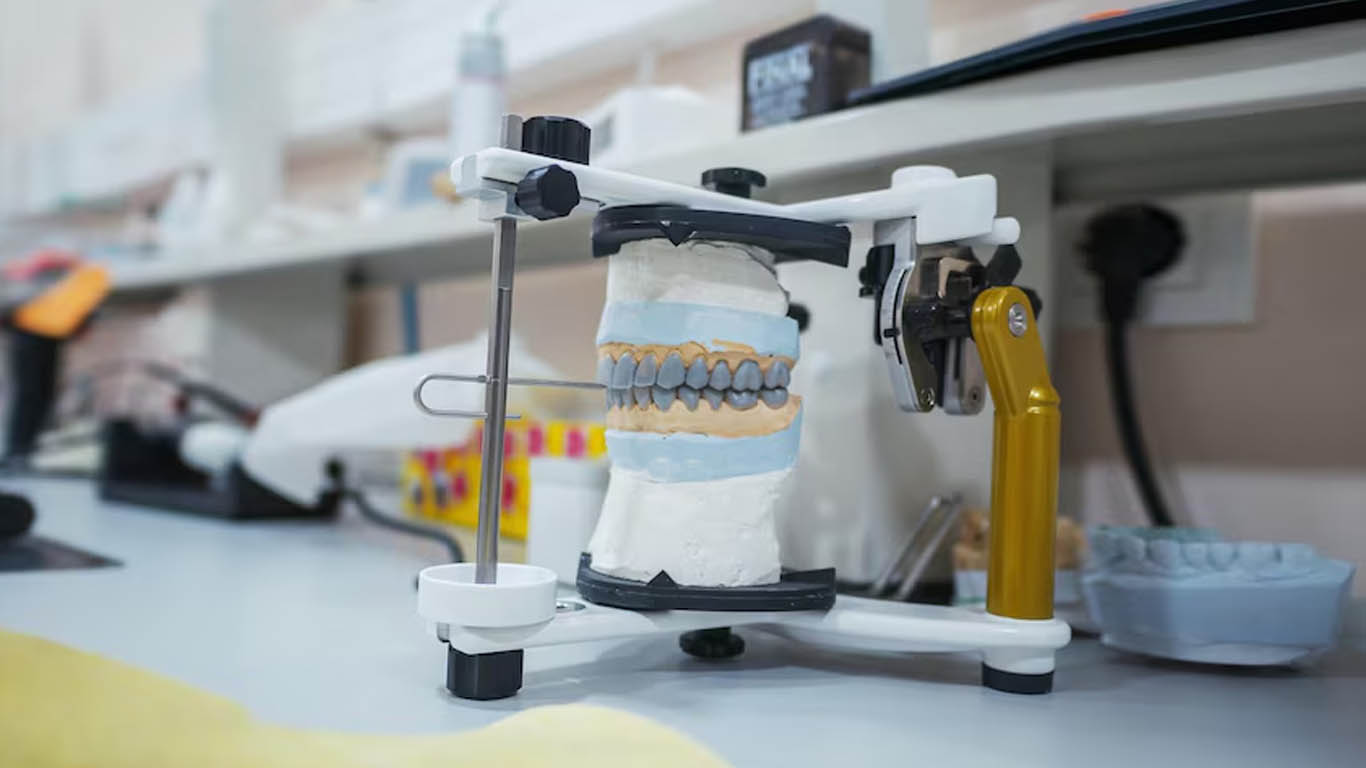
3D printing technology has revolutionized prosthodontic workows, offering unprecedented customization and eciency in dental practice. This transformative technology continues to reshape how dental professionals approach complex restorative cases, providing solutions that were previously dicult or impossible with conventional techniques.
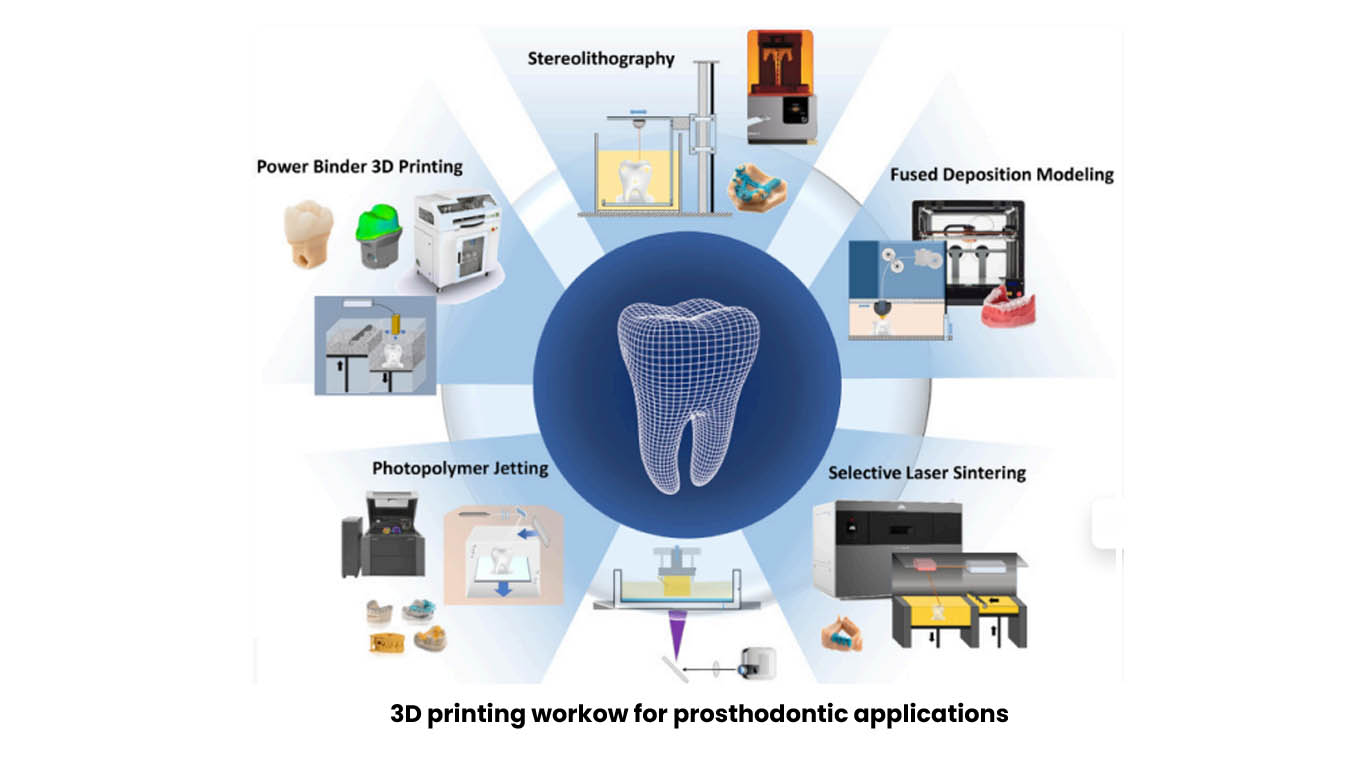
Clinical Applications
The versatility of 3D printing has expanded its applications across numerous areas of prosthodontic practice:
- Custom Impression Trays: Precisely designed for challenging anatomical situations, enhancing impression accuracy and patient comfort.
- Surgical Guides: Sub-millimeter accuracy for implant placement, significantly reducing surgical risk and improving implant positioning.
- Diagnostic Wax-ups and Mock-ups: Allowing comprehensive evaluation and patient preview of complex restorative cases.
- Temporary and Definitive Prostheses: Fabrication of complex geometries with high precision, including partial denture frameworks and full-arch provisional restorations.
Material Advancements
The evolution of printable materials has significantly expanded the clinical applications of 3D printing in prosthodontics:
- High-performance Polymers: Offering improved mechanical properties for long-term provisionals with enhanced durability.
- Biocompatible Resins: FDA-cleared materials suitable for direct intraoral applications, including surgical guides and trial prostheses.
- Ceramic-filled Composites: Combining the printability of resins with the esthetic properties of ceramics for definitive restorations.
- Multi-material Printing: Enabling the production of complex prosthetic components with different material properties in a single print.
Workflow Integration
The integration of 3D printing into prosthodontic workflows offers numerous advantages:
- Direct Digital Connection: Seamless data transfer between intraoral scanners and 3D printers eliminates impression distortion.
- Reduced Laboratory Dependency: In-office production capabilities for many applications, shortening treatment timelines.
- Time Efficiency: Significant time savings for multiple-unit restorations compared to conventional manufacturing methods.
- Design Flexibility: Ability to iterate designs rapidly without material waste, optimizing outcomes before final production.
Clinical Consideration:
When 3D printing surgical guides, ensure adequate radiographic markers during CBCT acquisition and verication of accurate seating before implant placement procedures. Conduct a physical validation of guide t on the study model prior to surgical appointment.
Future Directions
The ongoing development of 3D printing in prosthodontics shows promising trends:
- Direct Printing of Zirconia: Enables use of high-strength ceramics without the need for sintering shrinkage compensation.
- Bioprinting Technologies: Applied in tissue engineering for advanced maxillofacial prosthodontic solutions.
- Integration of AI: Facilitates automated design optimization, reducing reliance on advanced technical expertise.
- Faster Printing Technologies: Offering sub-micron precision suitable for efficient chairside applications.
3D printing has fundamentally changed the approach to prosthodontic treatment planning and execution. As material science and printing technologies continue to advance, we can expect further integration of these workows into everyday clinical practice, ultimately beneting both practitioners and patients through improved outcomes and eciency.