

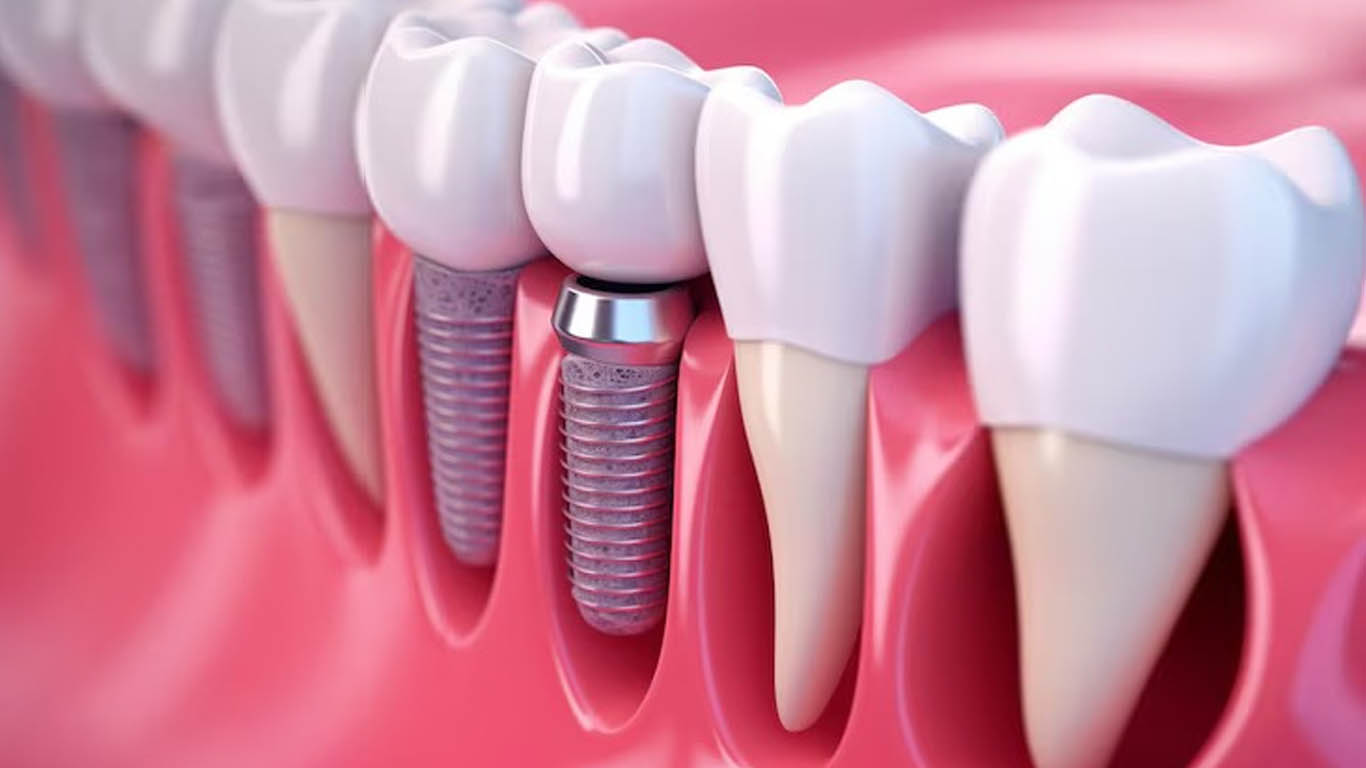
Peri-implantitis presents signicant challenges to implant longevity, requiring a systematic approach to management. As implant therapy becomes increasingly common, clinicians must be well-equipped to identify and effectively treat this condition to preserve implant function and maintain patient satisfaction with treatment outcomes.
Diagnostic Criteria
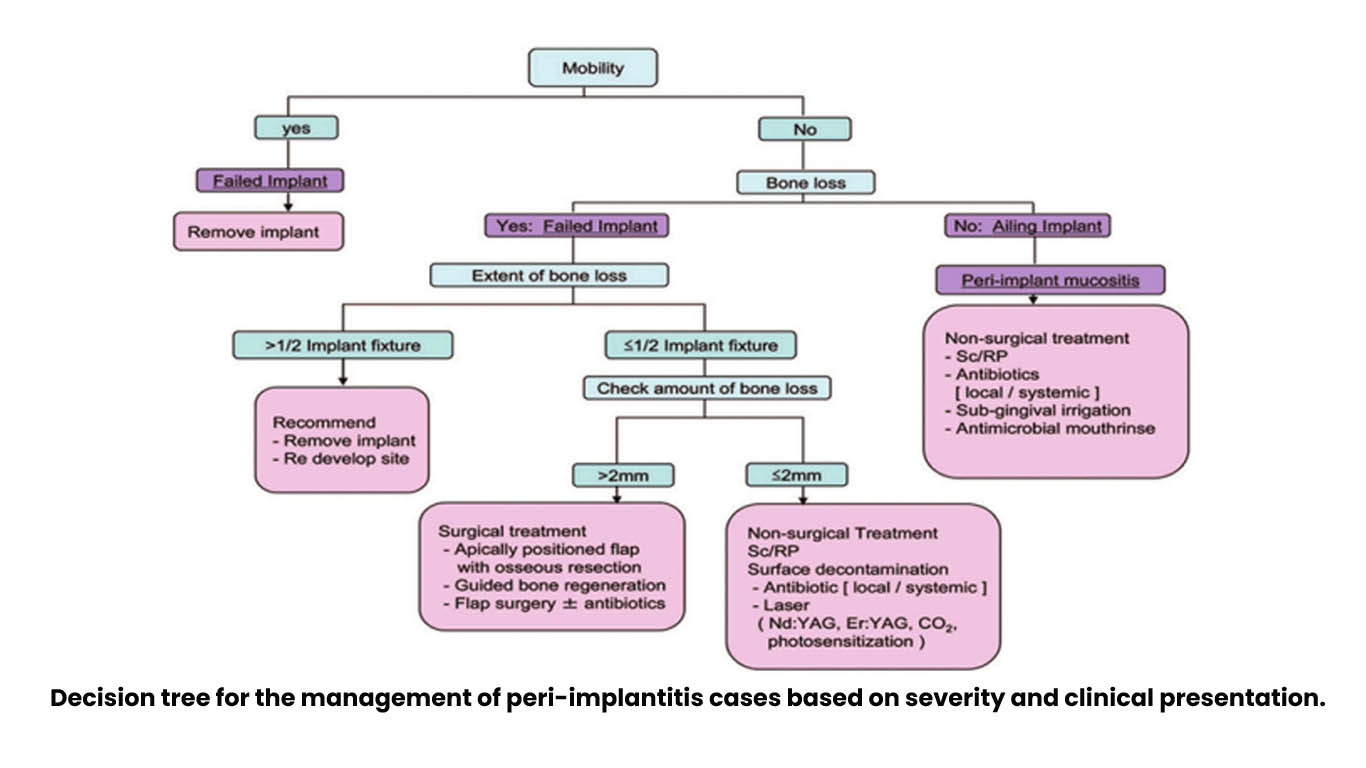
- Probing depth increase (>5mm) with bleeding and/or suppuration
- Progressive bone loss beyond initial remodeling
- Mobility indicates late-stage disease requiring immediate intervention
Treatment Protocol
- Non-Surgical Phase: Surface decontamination using specialized instruments (titanium brushes, glycine powder) and antiseptic agents
- Surgical Approaches: Access ap with implantoplasty for exposed implant surfaces and bone recontouring
- Regenerative Options: Guided bone regeneration using membranes and appropriate grafting materials
- Maintenance Protocol: Individualized recall intervals with specialized implant maintenance instruments
Emerging Treatments
- Laser-assisted decontamination (Er:YAG showing particular promise)
- Photodynamic therapy for biofilm disruption
- Local delivery antimicrobial systems for sustained release
Clinical Pear
Thread reduction (implantoplasty) of exposed implant surfaces has shown signicant benets in reducing reinfection rates and should be considered when surgical access is required. This technique involves removing or smoothing exposed implant threads to create a more cleansable surface, making it less susceptible to bacterial colonization.
Risk Factor Assessment
Effective management requires identifying and addressing contributing factors:
- Poor oral hygiene and inadequate maintenance
- Smoking and systemic conditions (diabetes)
- Prosthetic design issues (non-cleansable contours)
- Occlusal overload and parafunctional habits
Preventive Strategies
Prevention should be integrated into implant therapy from the beginning:
- Proper case selection and risk assessment
- Ideal 3D implant positioning
- Adequate keratinized tissue preservation/augmentation
- Prosthetic designs that facilitate proper hygiene
- Structured maintenance programs
The management of peri-implantitis requires a systematic approach that combines proper diagnosis, risk assessment, and targeted interventions. Early detection and intervention are critical for successful outcomes. As treatment protocols continue to evolve, clinicians should stay informed about emerging technologies and techniques that may further enhance treatment ecacy.